The Garden after Gaza: Fourth Meditation
Scorched Earth, Killing Fields, and the Harrowing of Gaza
Grow your own. Eat local. Farm to table. Urban agriculture. These are virtuous catch phrases in the West. I have written about urban agriculture in Paris. I use these phrases all the time. I embrace them. I try to live them.
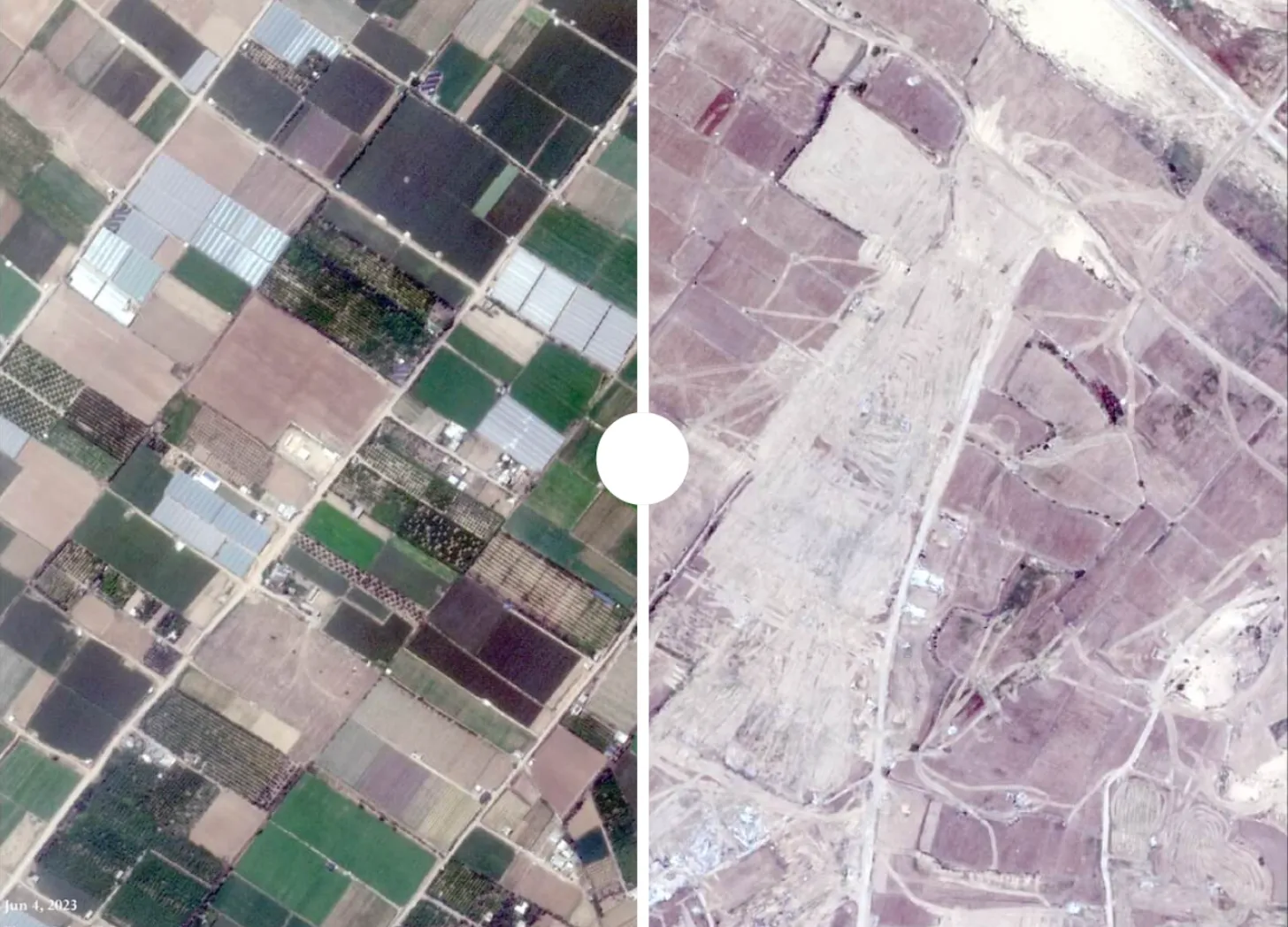
But these phrases crumble to insignificance in the context of the total obliteration of Gaza. We see on the left above a photo taken before June 2023 featuring green fields, neatly plowed plots ready for planting, and greenhouses. On the right, we see the same area in May 2024, seven months after the October 7, 2023 terrorist attack by Hamas and Israel’s subsequent revenge. It is a wasteland.
Before the start of the conflict, agriculture accounted for approximately 10 percent of Gaza’s economy, with more than 560,000 people relying entirely or partially on cropping, herding, or fishing for their livelihoods. Gaza’s agriculture and fisheries exports amounted to $67.3 million in 2022, primarily fresh crops such as strawberries, tomatoes, cucumbers, eggplants, sweet peppers and fresh fish.
According to FAO, rebuilding Gaza’s agricultural sector will be extremely expensive and will take years, if not decades.

Scorched Earth
The headline of a May 2024 article in The Guardian asks: ‘Ecocide in Gaza’: does scale of environmental destruction amount to a war crime?
The full extent of the damage in Gaza has not yet been documented, but analysis of satellite imagery provided to the Guardian shows the destruction of about 38-48% of tree cover and farmland.
Olive groves and farms have been reduced to packed earth; soil and groundwater have been contaminated by munitions and toxins; the sea is choked with sewage and waste; the air polluted by smoke and particulate matter.
Researchers and environmental organisations say the destruction will have enormous effects on Gaza’s ecosystems and biodiversity. The scale and potential long-term impact of the damage have led to calls for it to be regarded as “ecocide” and investigated as a possible war crime.
For a compelling (and heartwrenching) video report, see “No Traces of Life”: Israel’s Ecocide in Gaza 2023-2024 by the investigative team at Forensic Architecture. They document the situation fifteen months ago. It has only gotten infinitely worse since then.
It is hard to imagine that, even if a ceasefire were imposed on Israel tomorrow, the United Nations and aid organizations were allowed free access to deliver aid, rich Arab countries poured money into clearing the land of rubble, rehabilitating it and recultivating it, Gazans could take up, in my lifetime, agriculture as they practiced it before October 2023.

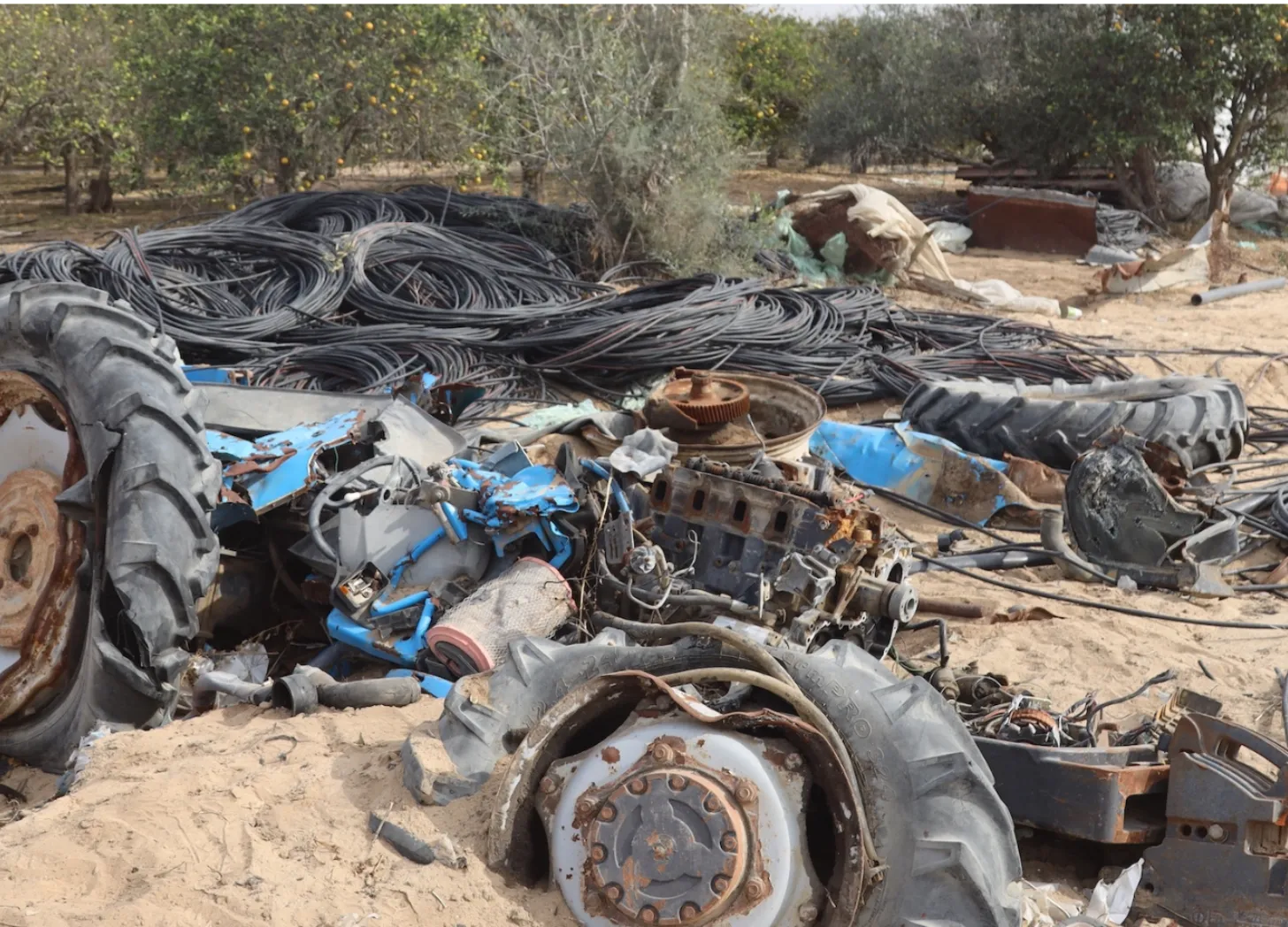
Chinese philosopher Lao Tsu said: “Give a man a fish, you feed him for a day. Teach him how to fish, and you feed him for a lifetime.” Ban the fisherman from putting out to sea, he starves, as does his family and those who buy his fish. Destroy the cropland and greenhouses and equipment and water supply of farmers, and they can no longer feed themselves, nor the people who buy the fresh food they produce. Pollute the land and salinate the aquifers so that they are unusable, and you make the land unproductive for generations to come.
Israel has done all of this to Gaza. Rendering the land uninhabitable has been intentional and methodical, preparation for forcing Gazans to leave their ancestral land “voluntarily.”
The obliteration of Gaza and the genocide of the Palestinians who live there have been going on for nearly two years now. There have been times during this onslaught when resourceful — and desperate — Palestinians tried to grow a few nourishing green plants amidst the rubble and ruin of their bombed out homes and neighborhoods.
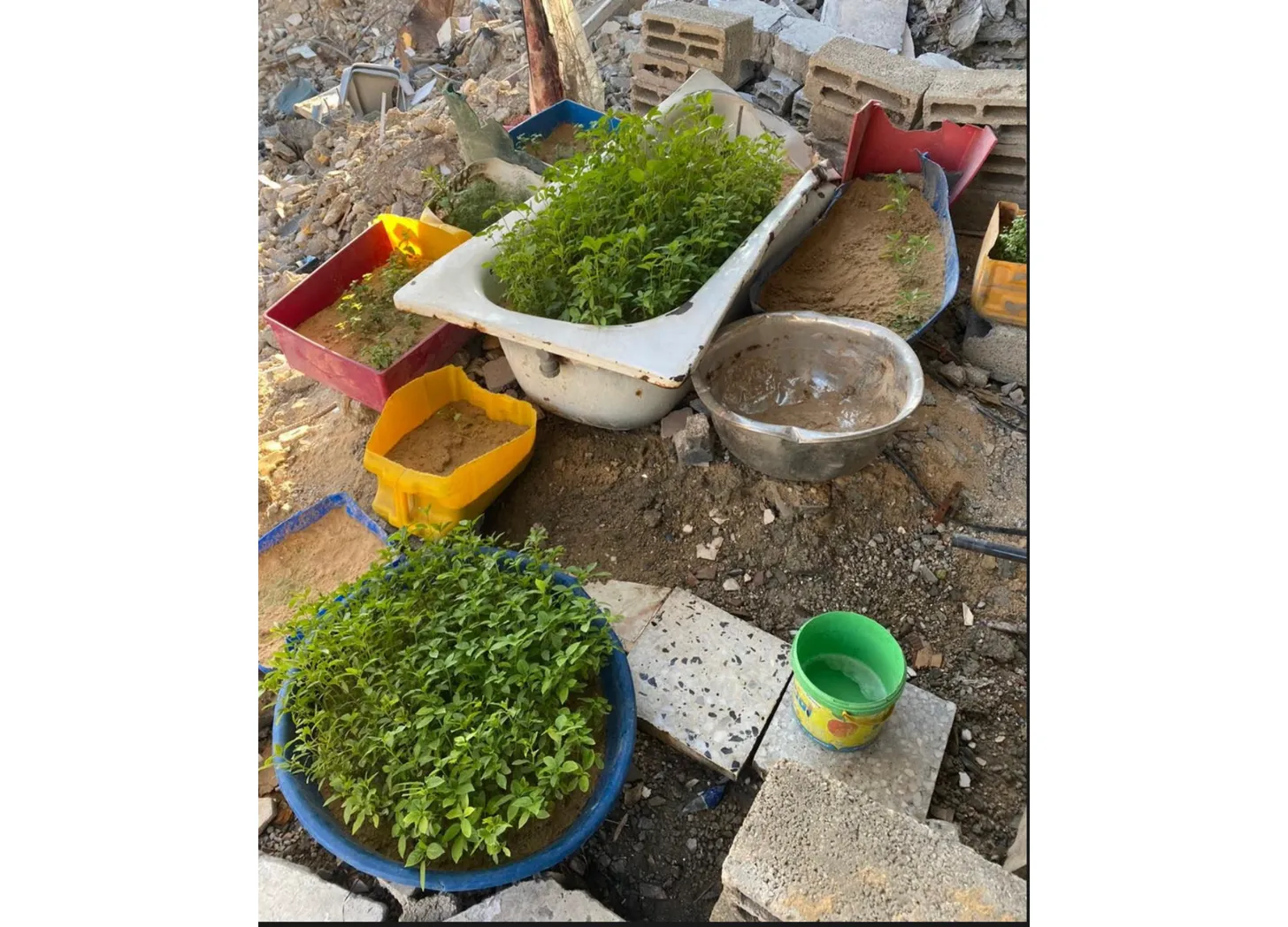
These improvised mini-potagers were reported, at first, as charming demonstrations of pluckiness; new ways to practice “urban agriculture.” They were, in fact, symptoms of desperation. As Jabaliya resident Mohammed Qomssan explained a year ago, in August 2024:
[Qomssan] says today that he and his family are focused on survival, in a part of Gaza that most others have left.
Their little vegetable garden, he says, is a way to try to ensure that survival, especially as they know there will be no harvesting of fresh food for them any time soon, after the region’s farmers were displaced and fields destroyed.
“All the farming land in Gaza is gone, it’s been swept away and destroyed, so we went to the market and found some seeds,” says Qomssan.
“Not everything was available but we bought what we could find and we said, ‘we’ve got this bit of space, we can use it to plant some of the crops’.
“After that, we decided to start growing vegetables, so we could live a little like ordinary people.”

Where is Mohammed Qomssan and his family now? Not in Jabaliya, that’s for sure. Where is his salvaged container garden of edible greens? Destroyed, no doubt. Yet, in one of the most hostile environments on earth right now, Palestinians continue to try to grow food. Why? Because, as the Union of Agricultural Work Committes writes in a recent statement:
Food gives people roots — literally and figuratively. That is why the occupation targets it. And that is why Palestinians defend it with such courage.
Because to grow food is to say: We are still here. You have not won. You will not erase us.
The Killing Fields
In the television series ‘The Hunger Games,’ teenagers fight to the death in a televised spectacle set in Panem, a dystopian sequel to the country that was the United States.
In Gaza, starving men, women, and children, who have no other source of food, fight to get their hands on a sack of flour distributed under Israeli military control by U.S. mercenaries called “contractors” working for the Gaza Humanitarian Foundation (GHF). They line up to try their luck during a stop-watched open period. Few succeed. Every day scores are shot, killed or wounded, trying to get some food for their families. We watch it all in harrowing images and videos on television and social media. We feel badly. Too many others don’t. Some actually cheer the slaughter on.
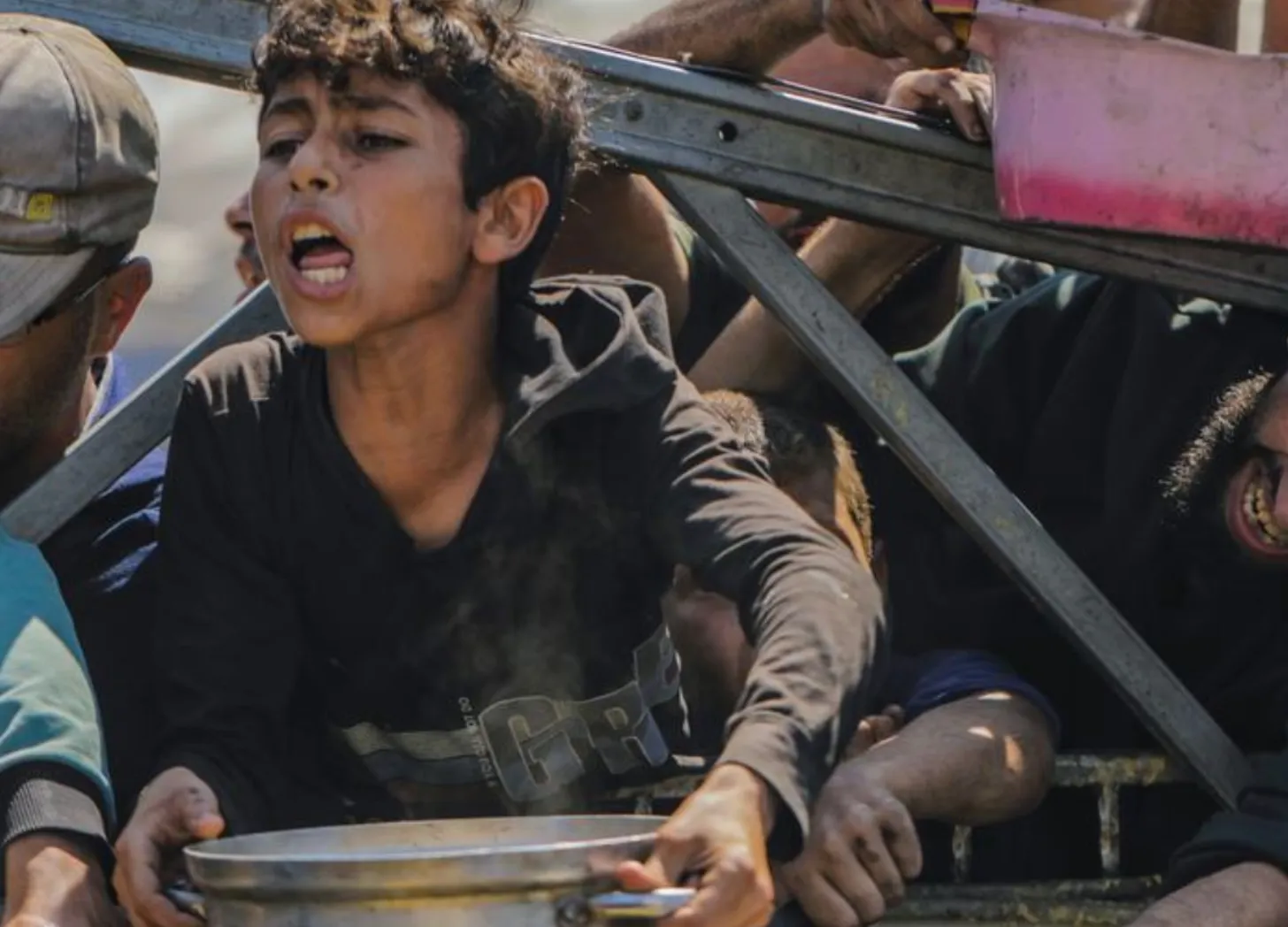
The wounds of those who are brought to hospital from the GHF lines indicate people, including children, are being deliberately shot in a bait-and-shoot program, with wounds one day to the head, the next to the abdomen, the next to the testicles of teenage boys. Doctors without Borders has concluded, after examining the medical evidence of those wounded and killed trying to get food at GHF: “This is not aid. This is orchestrated killing.”
Gaza, once home to productive farmland and to coastal wetlands of exceptional biodiversity, has become a killing field. From orchards of olive trees and fields of strawberries and greenhouses full of eggplants, Gaza’s destroyed land now only produces death.

Meanwhile, life in Israel goes on, as far as I can tell, pretty much as ours does in the West. I see Israeli Airbnb listings, TripAdvisor restaurant reviews, people shopping, relaxing on the beach, ads for neat homes with green lawns, ads for sprawling farms, as if none of the machinery of starvation, obliteration and liquidation of an entire populace was going on next door.
Cornucopia and Conscience
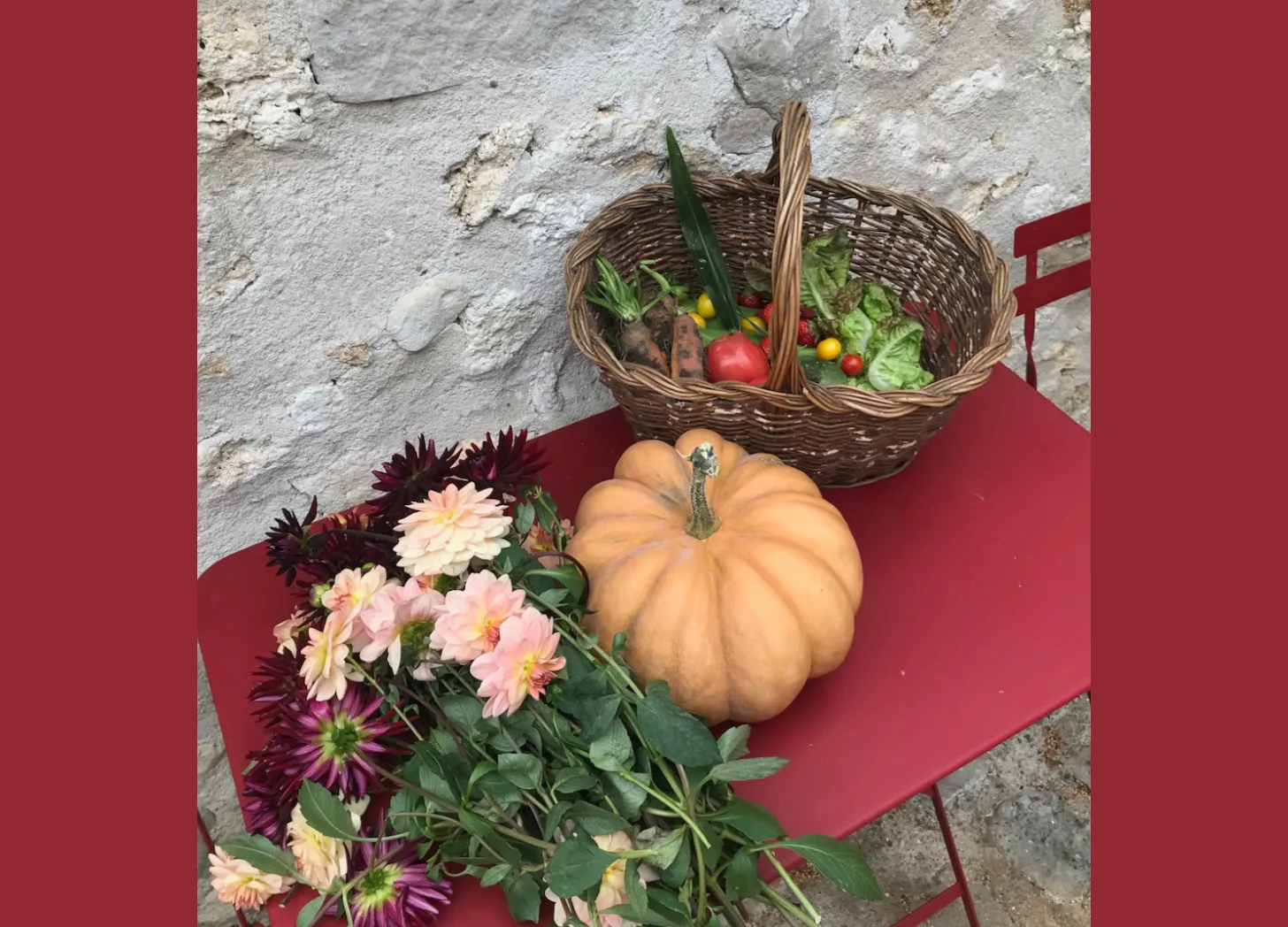
In his book The World After Gaza, Pankaj Mishra writes that no other disaster in our life time has left us “with such an intolerable weight of grief, perplexity and bad conscience” as the obliteration of Gaza by Israel “with acts of savagery aided by the world’s richest and most powerful democracies.” We who are citizens of those democracies and who have any conscience left at all feel deep shame, immense guilt, and corrosive helplessness watching the livestream of a people being liquidated, with our money, our technology and our weapons in the perverse name of defending Western civilization and democracy. Citizens of formerly colonized countries are more likely to see the Israeli occupation (and Western civilization, for that matter) for the reality behind the mask of lip service to human rights, democracy and the rule of law: apartheid, colonization and, ultimately, ethnic cleansing and genocide.
Pankaj Mishra says that he was compelled to write his book out of guilt but also “with the faith that there is such a thing as solidarity between human beings as human beings, and it does not end with the color line.” I am trying to share that faith. The arc of history does not look as if it is bending toward justice, to paraphrase Martin Luther King, Jr., in Gaza, nor, increasingly, in the West Bank. Solidarity across the color line is being dynamited in the United States and by an ever more loudly grumbling and menacing white supremacist far right in Europe. The institutions that paid at least lip service to the solidarity of human beings across the color line are in tatters. There is utter defiance now of the rule of law, of human rights, or even basic human decency.
I don’t know if I can ever feel the same joy in my garden, its beauty and its abundance, after Gaza. I don’t know if I can ever feel the same satisfaction at growing my own food again after Gaza. How to work at one of the most ancient human activities, coaxing food from the earth, without thinking of those who are starving because, in part, they can no longer do in their destroyed homeland what I do in my backyard? Who, all signs indicate, are about to be exiled forever from the land that nourished them and their ancestors dating back millennia, the land that they love, the land that they nourished, and that nourished them?
The Harrowing of Gaza
What has been done to Gaza is a truly harrowing calamity. The word “harrowing,” from “harrow,” or a garden rake, was used by Shakespeare circa 1600, to mean causing great distress, as in raking over a wound. An alternate source of the word “harrow” is the Old English hergian meaning “to ravage, plunder, seize and capture.” Israel’s harrowing has turned Gaza into a hell on earth such as no living human being should have to try to survive.
And yet they do, with bitter sweetness. I leave you with a short story, The Last Fig Tree, by Logain Hamdan, published by We Are Not Numbers, a forum for publishing and nourishing young Palestinian voices.