
Susanna Crossman’s Home is Where We Start
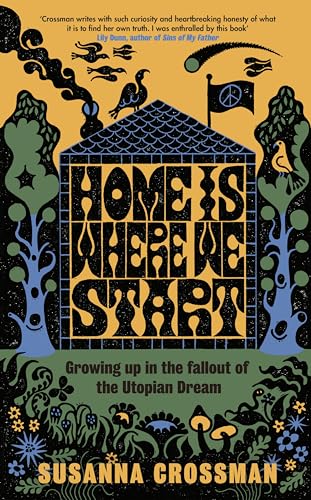
Susanna Crossman’s achingly vivid memoir about growing up in a utopian community in 1970s England achieves what few memoirs have done since the genre’s inception. It fuses the writing I of the present, an adult fluent in literature, sociology, psychology, philosophy and wise with the life experience of a caregiver and a mother raising her own children, with the written I of the child she was when her mother moved Susanna and her siblings into a rambling old house on the margins of mainstream society. In this house, among a changing cast of adults experimenting with life during the heady counter-cultural 1970s, and scores of children mostly, and often dangerously, left on their own, the young Susanna comes of age. It is a miracle that she came through the childhood she describes intact, but it is most certainly because of her peculiar childhood, and the dangers and uncertainties thrust upon her, that Susanna can tell the story of her growing up with such vivid honesty, through the eyes of both the child she was and of the adult she has become. The precariousness of a childhood where Susanna was largely left to fend for herself, and to fend off indifferent mothers, predatory adult males, mean child-bullies, and mocking children from more normal households at school is surely what made Susanna Crossman the highly original writer she is today.
There is heartbreak aplenty in Home is Where We Start, beginning with Susanna losing her “Mum.” Susanna’s mother, like the other mothers in the community are to be called by their given names, or the fanciful names they invent for themselves as they shrug off the constraints of patriarchy and every other societal structure they can think of. “Mum” becomes “Alison.” At first, it’s hard for the young Susanna to give up “Mum” but she gets used to it, at least as a change of nomenclature. This and other lessons of heartbreak are bound up with the erudition that Susanna, now an informed and caring adult, weaves into the memories of herself as a child. Every chapter connects the remembered events, feelings, and perspectives of childhood with a philosophical or a literary observation, from Condorcet to classic fairy tales; from Charles Fourier to Shakespeare.
Language is Susanna’s lifeline. The etymology of words, the way they are used as speech acts, as incantations, as weapons: It all fascinates her. Words that struck her child’s mind ring yet in her mind today. They became early on, and are still now, the currency she uses as a writer to process what she lived through, which continues to inhabit her even now. At loose ends at the end of her teens, with Alison and a new partner, Bill, heading off to Africa, the community in which she grew up dissolved, the old house abandoned, Susanna irrationally dodges educational and professional opportunities in England that she could easily ace, she who has no family money or even a family home to fall back on. Instead, she follows a young man whom she barely knows but with whom she has fallen in love to France where, when asked who she is, she can answer in a language not yet her own: “Je m’appelle Susanna.”
Through it all, Susanna never stops writing. When all else is chucked, journals are kept. Writing, and the reinvention of herself as a homemaker, in the sense of someone who makes a home for herself and others that is a place of safety and care, with a loving partner and, eventually, three daughters is what makes Susanna whole enough to write about the unmooring that was her childhood.
Home may be where we start, but a home of our own it is where, if we are lucky, we end up. Susanna Crossman’s memoir is a startling achievement of heart and survival. Home is, after all, where the heart is. There’s no place like home. All true, Susanna. All too true.
Paris
September 10, 2026
Powered by WordPress